When the clients—a young couple with a shared love for France—contacted our studio, the exterior of the house, an early twentieth-century building, had already been fully renovated in a French style, including the construction of a new four-pitched attic roof.
A sequence of arched windows of different sizes, aligned with the composition of the facades, defines the airy space and brings generous natural light into the rooms despite their orientation. The roof is carried by a timber structure resting on the perimeter walls, with beams and three pillars irregularly distributed within the space.
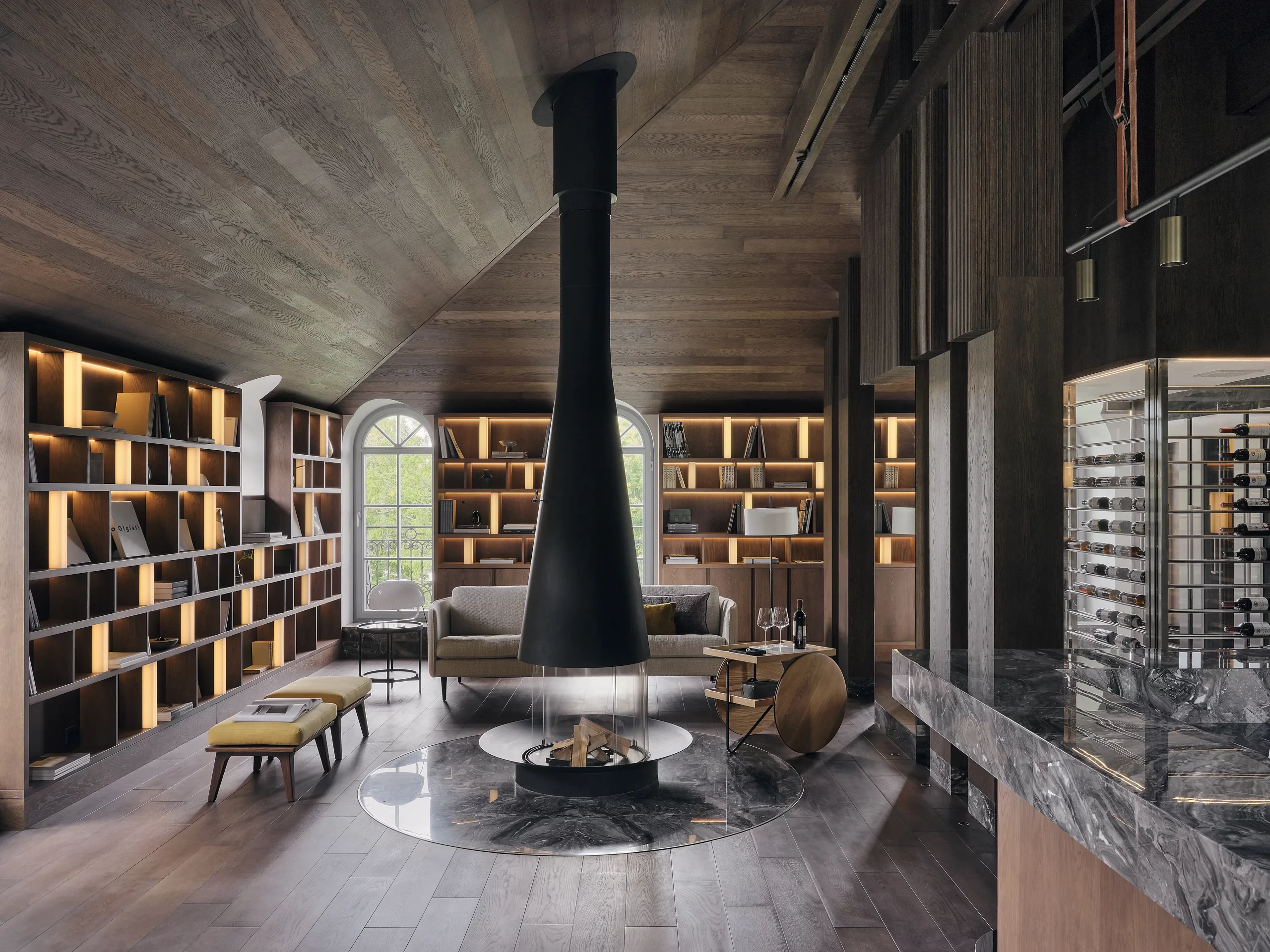
The clients asked to divide the attic into three main areas: a lounge where they could relax and host friends around a 360-degree fireplace, a studio where the husband could work late without disturbing the rest of the family, and a bedroom for their eldest son.
Although, apart from the exterior facades, the entire house had been realized in a French style, the clients decided to follow the husband’s personal taste for the attic. They asked us to design the lounge and the studio drawing inspiration from mid-century American modernism, while imagining a raw, loft-like space for their son.
From the outset, our aim was to establish a dialogue between the new interiors and the rest of the house, creating a shared sense of place.
While different materials, colours and atmospheres define the attic, the two parts of the house are subtly tied together through a balance of elegance and compositional rigour, expressed in carefully detailed architectural elements and custom furniture.
Climbing the classical white staircase with dark wooden tread, set between tall grey walls decorated with white mouldings, one reaches the attic corridor, still articulated in the same French language as the floors below.
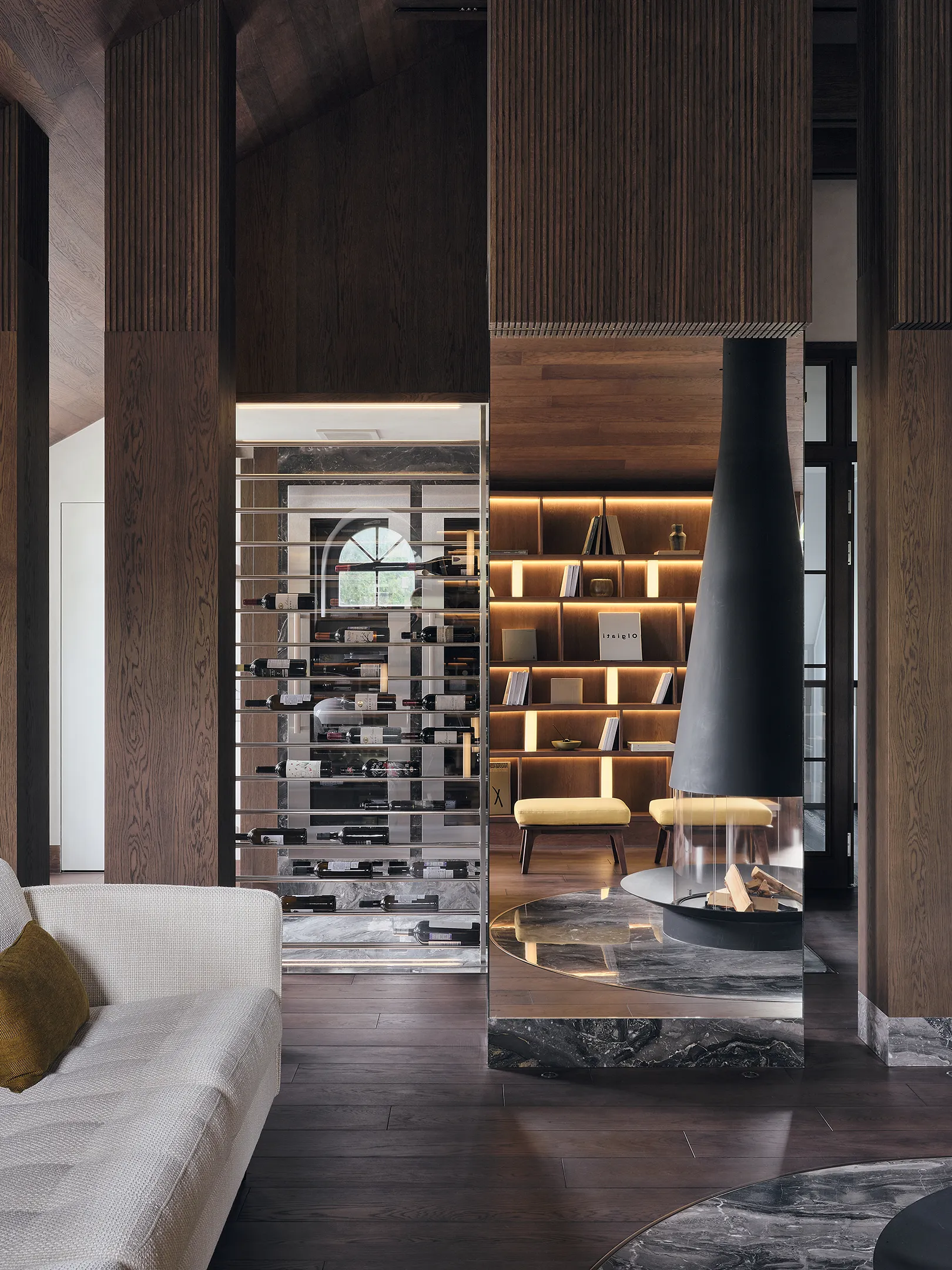
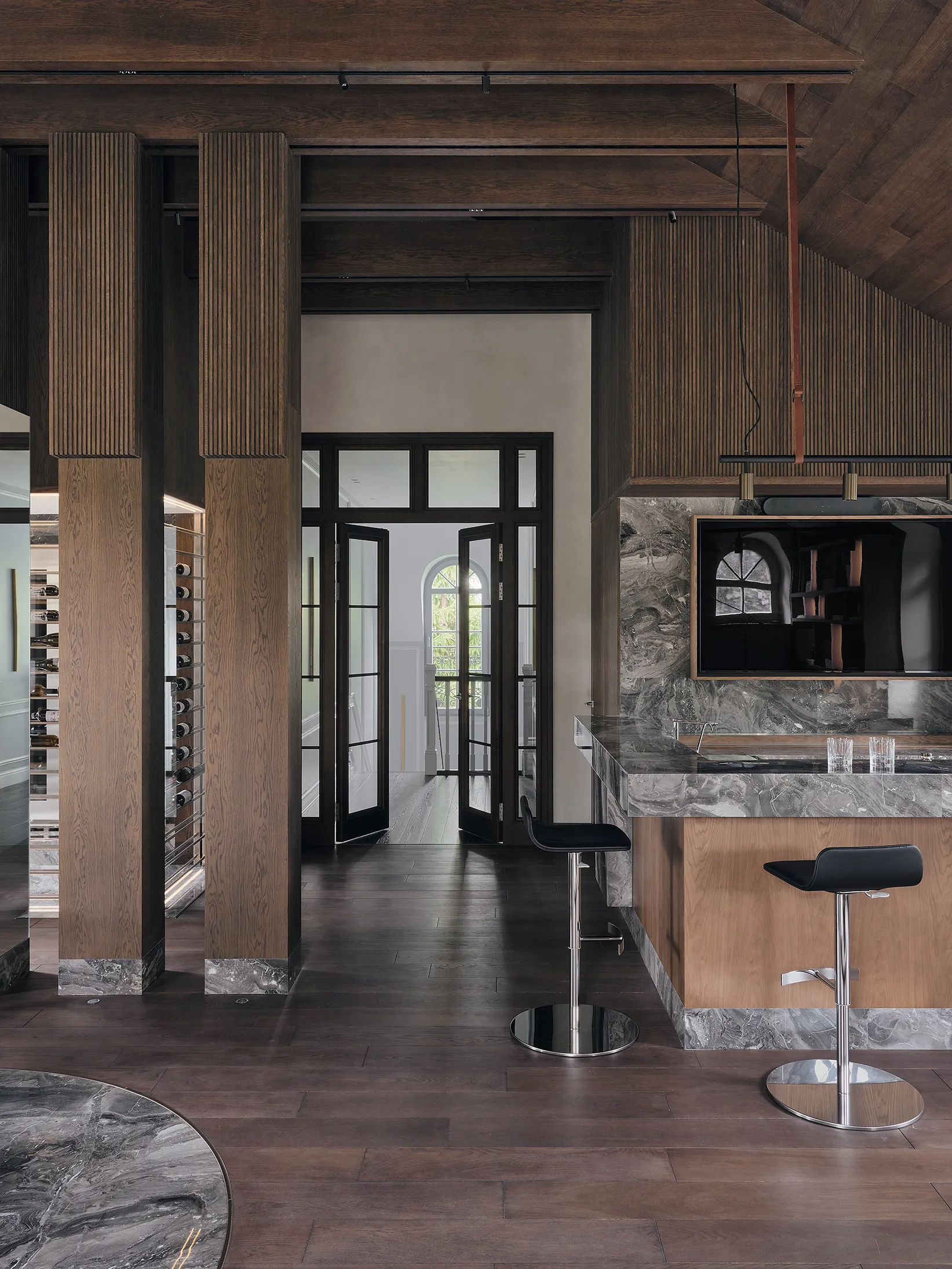
Large transparent glass doors invite visitors into the lounge, offering a first glimpse of the interior through a central system of wooden pillars. This structure was designed to conceal the irregular geometry of the roof while preserving a sense of intimacy and spatial layering within the room.
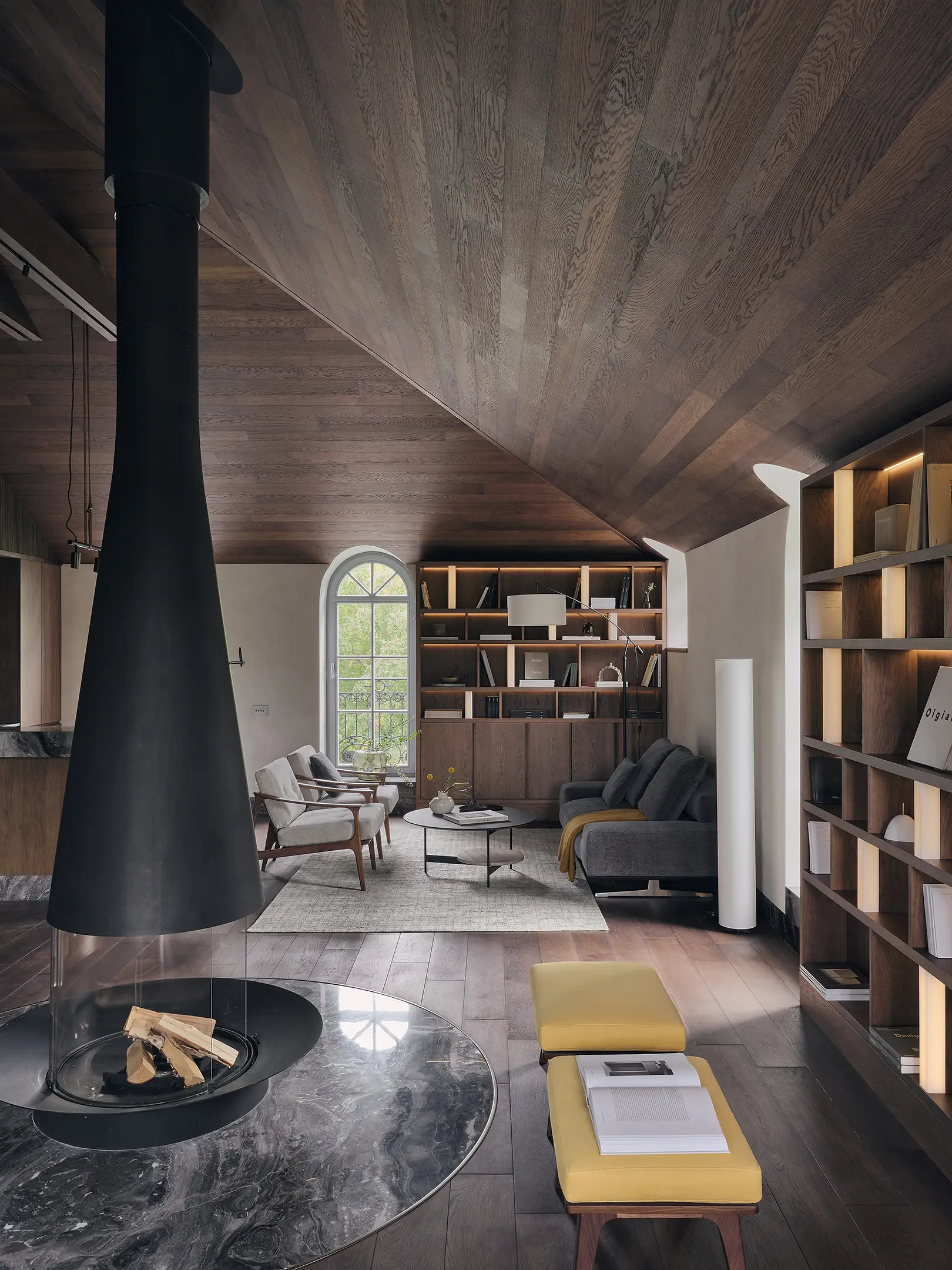
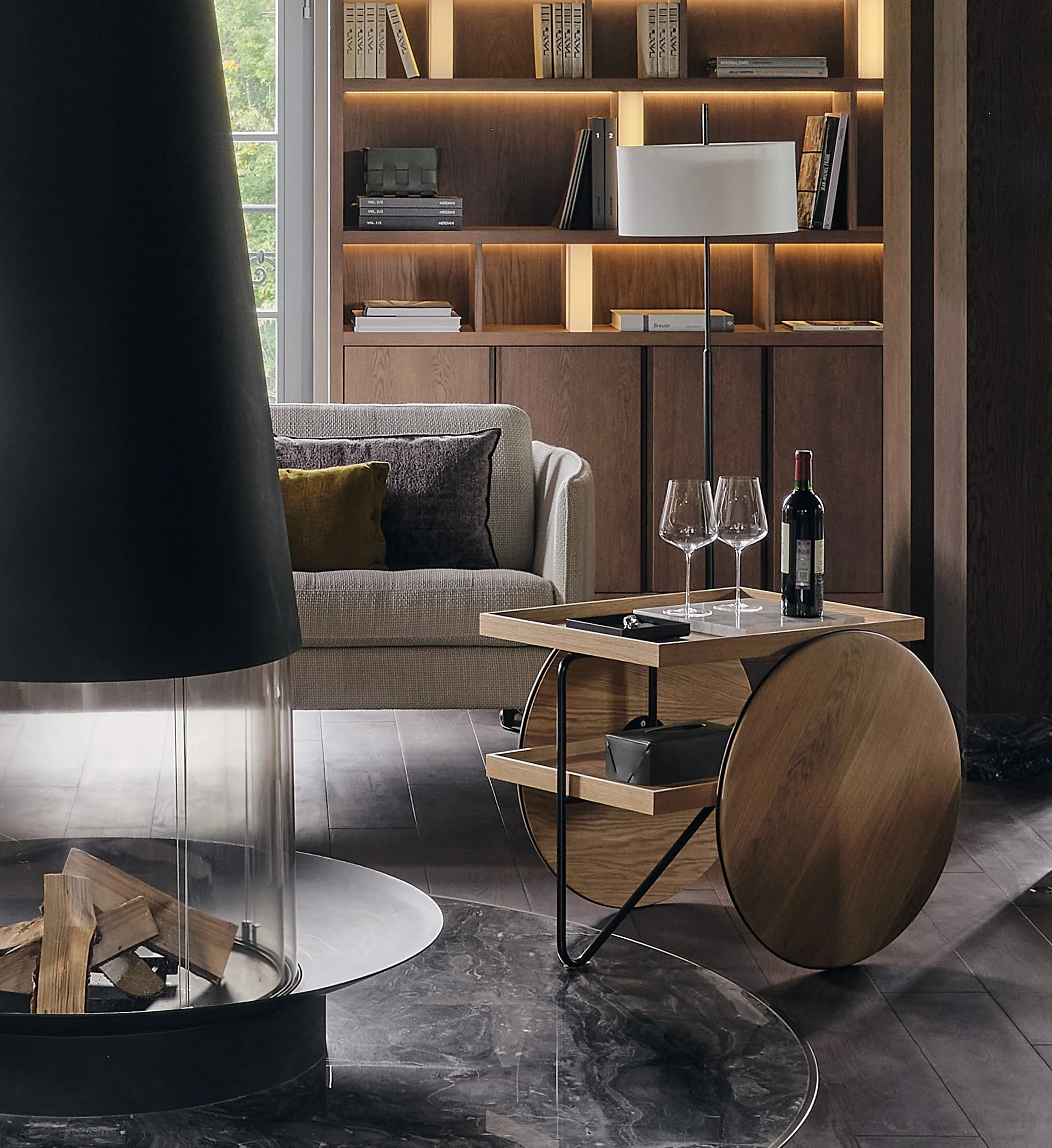
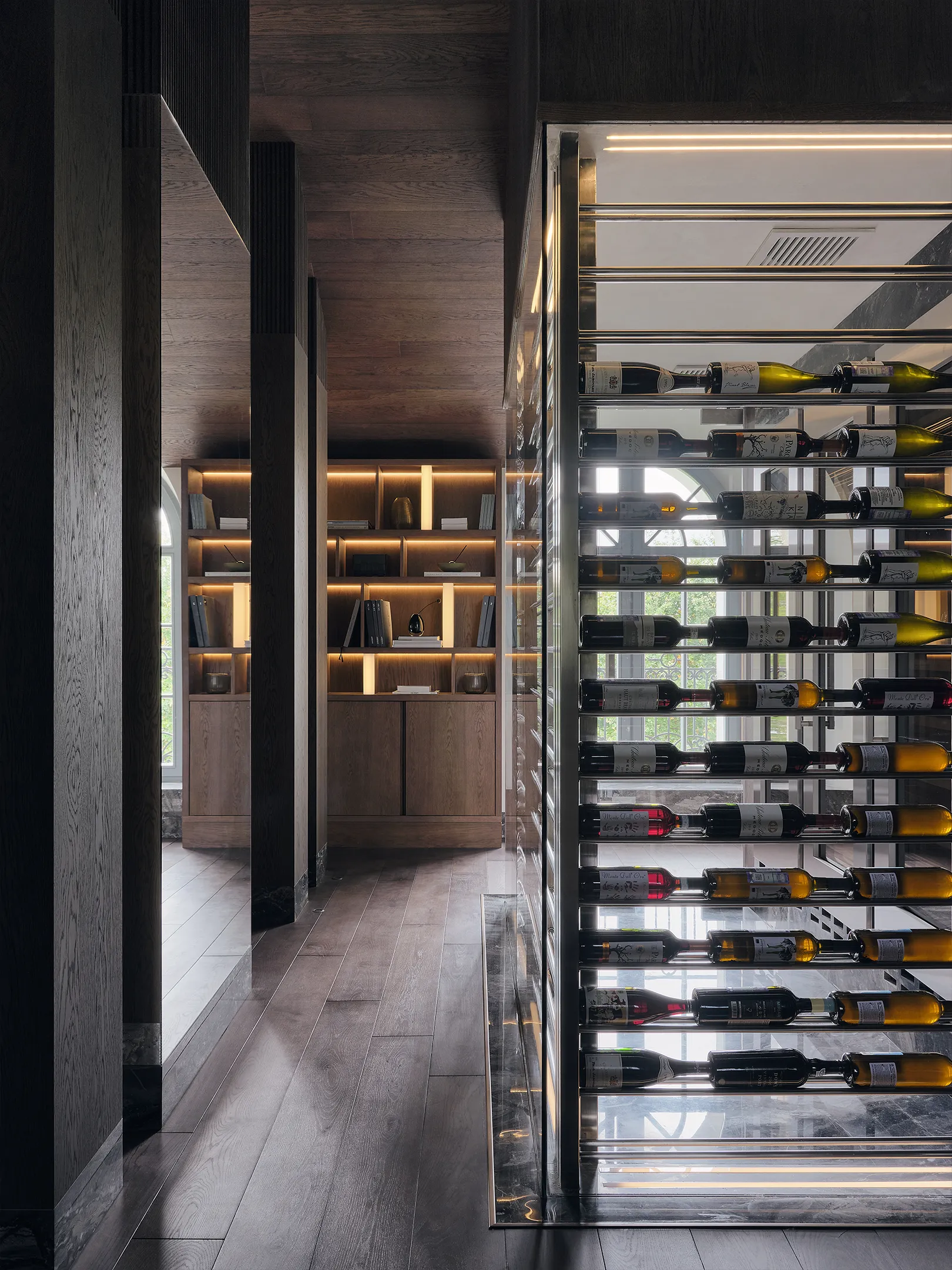
Beyond the pillars, two comfortable seating areas are arranged around a 360-degree metal fireplace. They are framed by a custom storage wall where the clients can display books and design objects. In addition to LED strips illuminating the shelves, the system incorporates matte glass vertical dividers of varying heights and depths, softly self-illuminated to create a warm and intimate atmosphere.
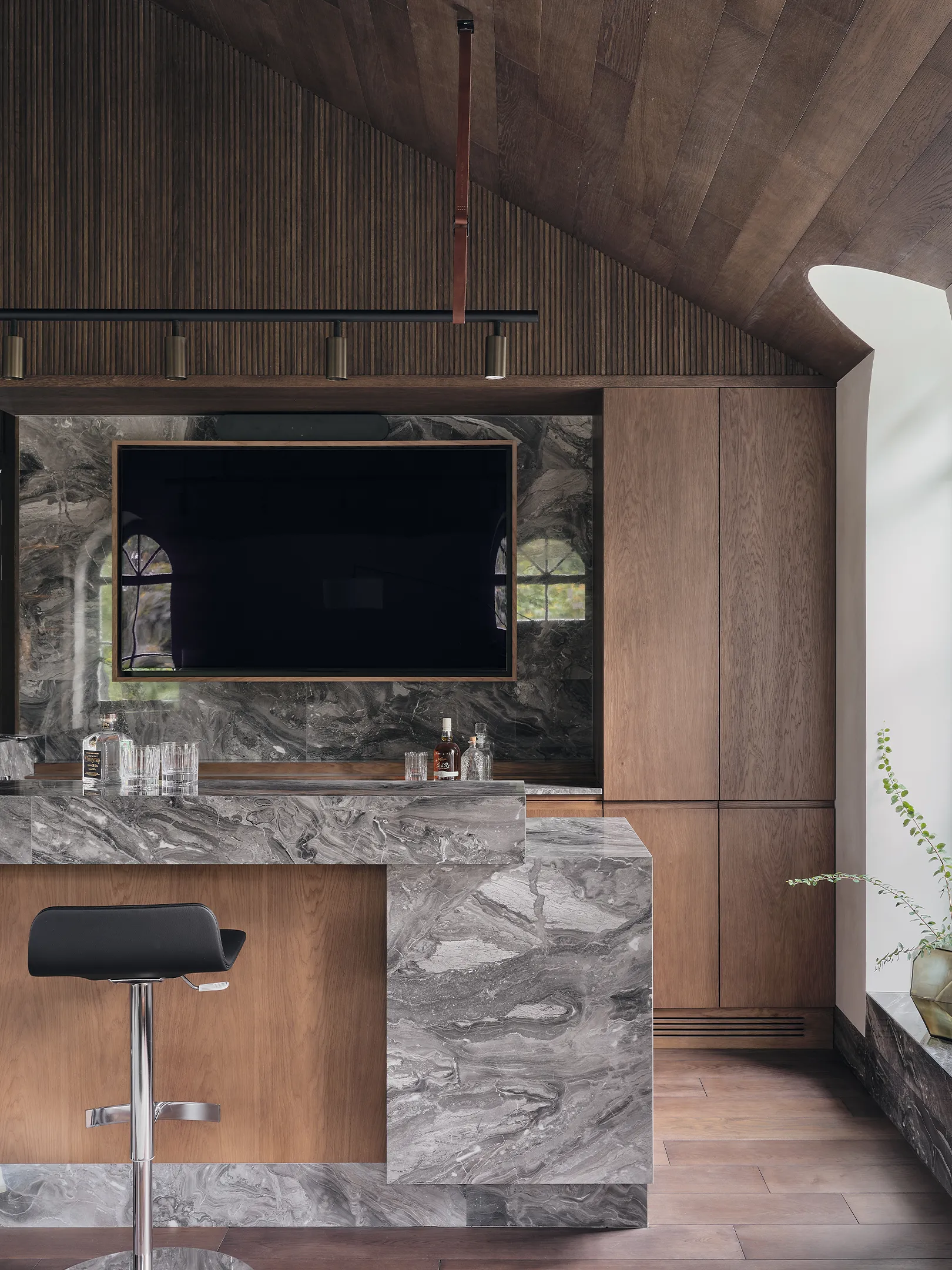
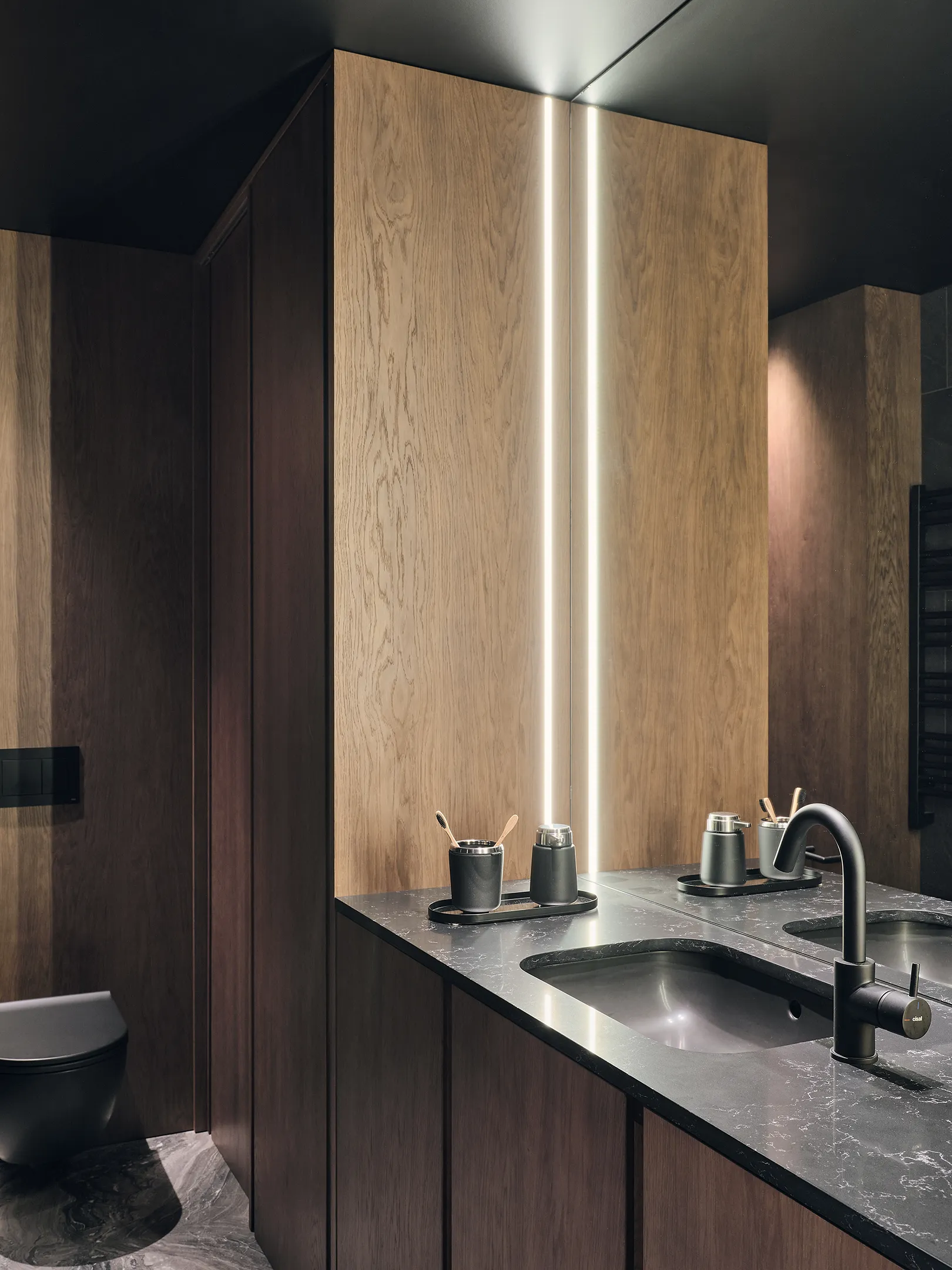
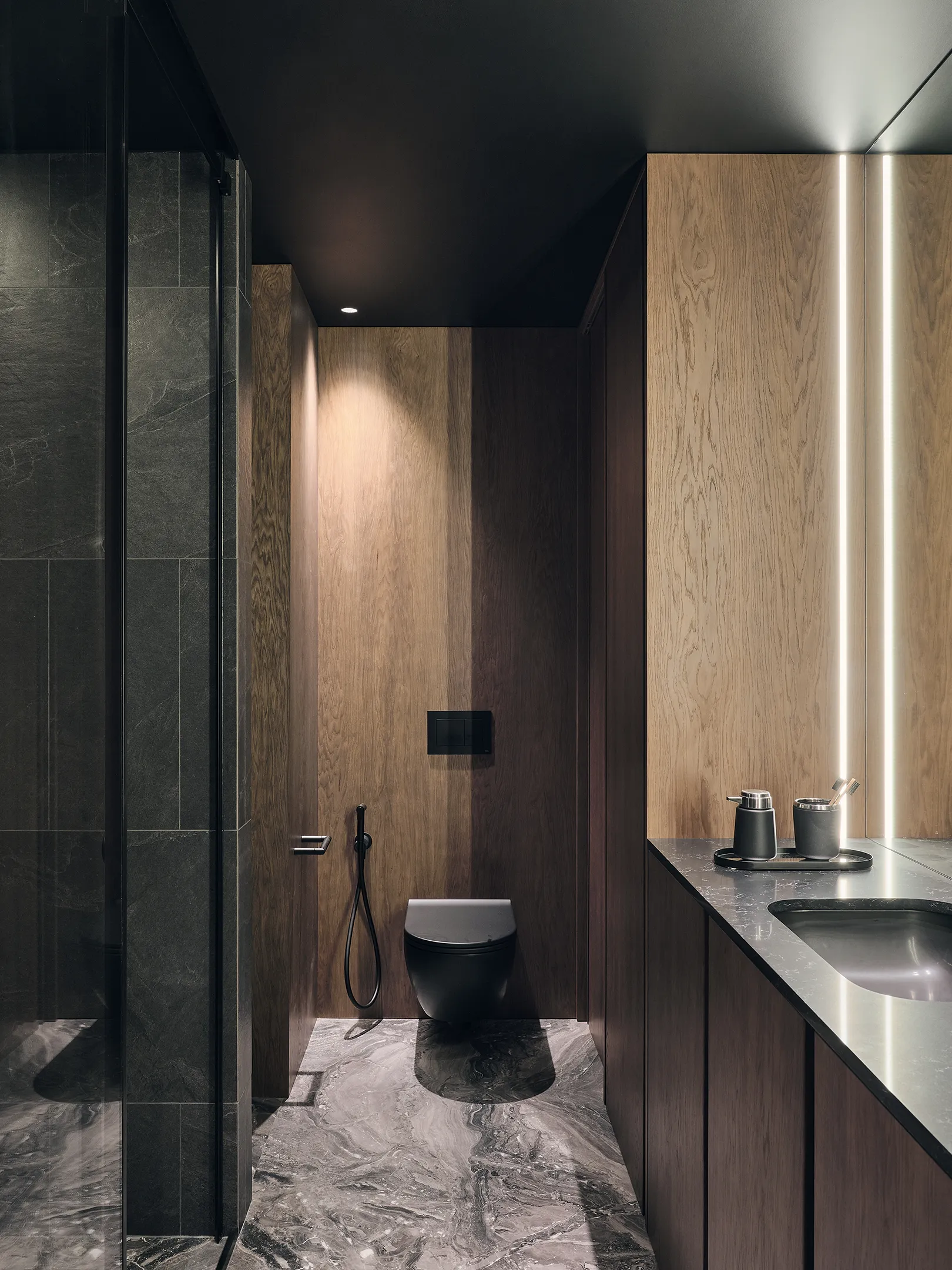
A sculptural bespoke bar counter in Arabescato Orobico marble and wood emerges from a niche within a wooden volume that also contains a small but refined bathroom.
On the opposite side of the room, another suspended wooden volume rests above a transparent glass wall, aligned with the central pillars. It houses a generous wine cellar, where both the floor and the rear wall are clad in slabs of Arabescato Orobico marble. The same stone is also used around the fireplace and for the window sills and baseboards.
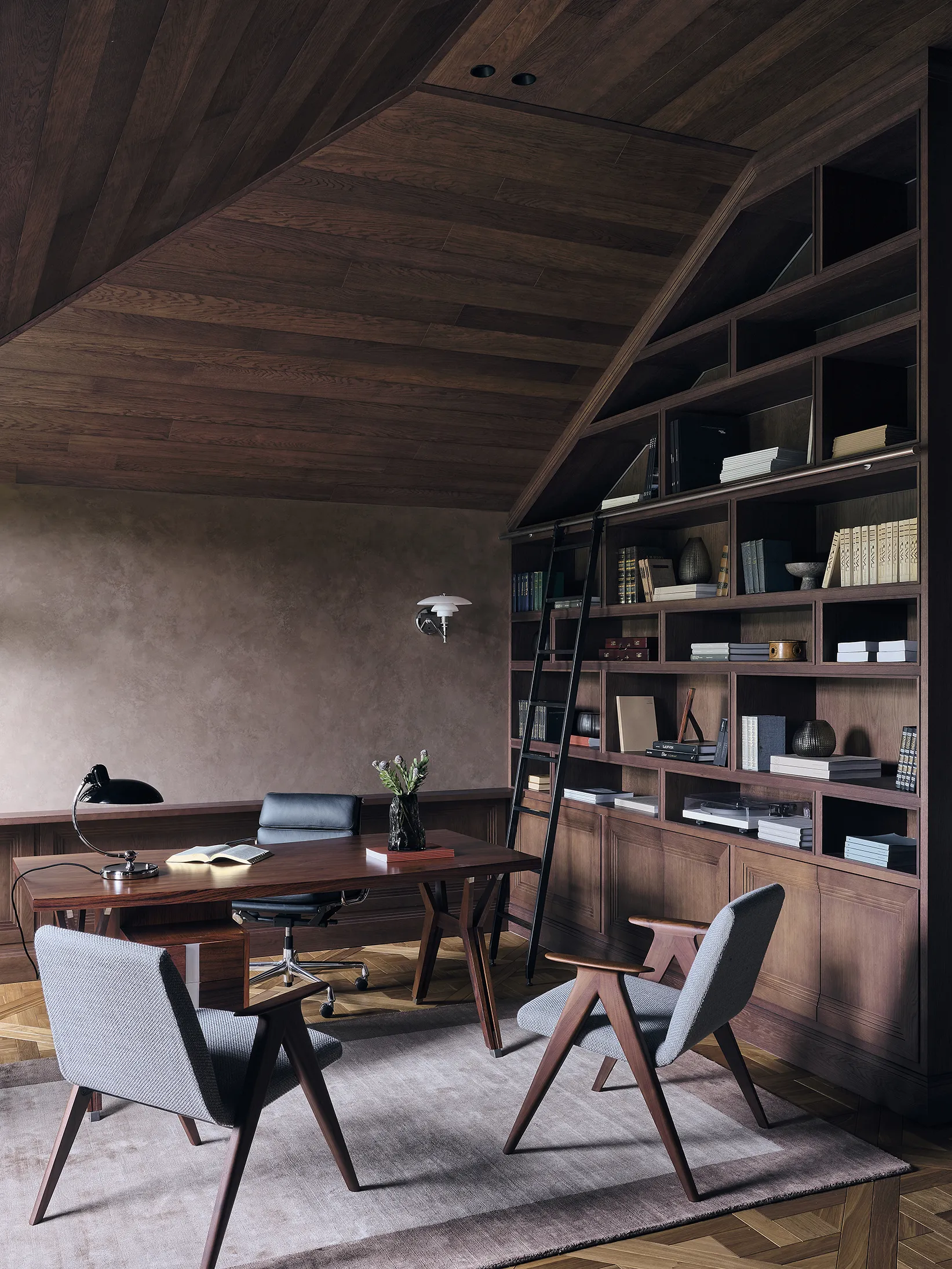
Specially stained oak boards of varying widths and lengths cover the floor and the sloping surfaces of the ceiling. The same wood is also used to clad selected walls and for the custom-made furniture. Achieving the right tone—capable of responding to the natural light of Sestroretsk without ever appearing too dark—required numerous trials and close collaboration with skilled artisans to refine the combination of products, finishes and techniques.
The walls are finished with a bespoke decorative plaster developed specifically for the project together with an Italian artisan.
Its vibrant yet subtle beige surface, slightly reflective, constantly shifts with the changing light and with movement through the space, creating a calm yet lively atmosphere—equally suited to quiet reading or to evenings spent with friends.
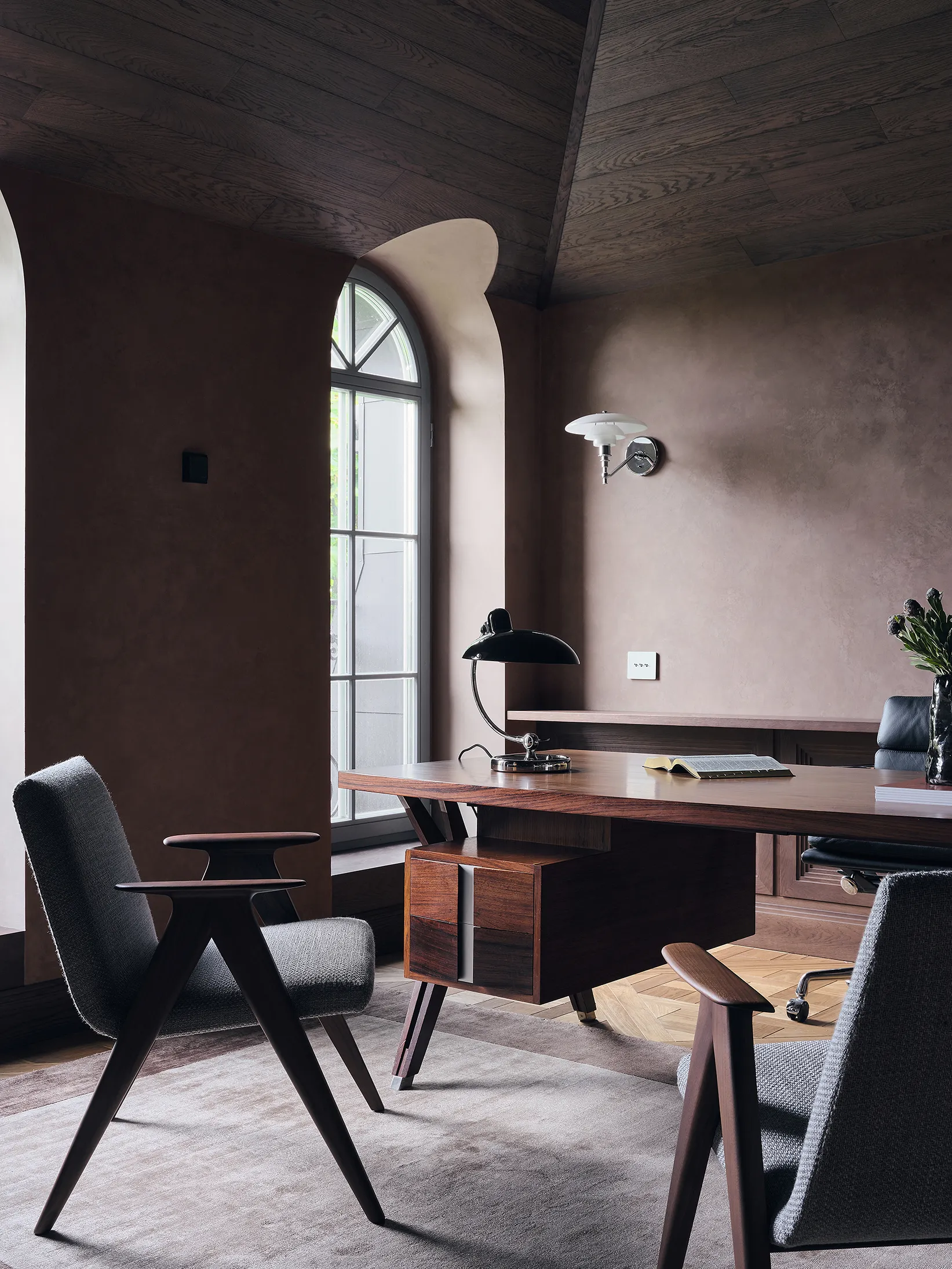
While mid-century modern remains the primary reference for the studio, several details subtly recall a more classical language, strengthening the connection with the rest of the house.
The oak boards used in the lounge give way to a Versailles parquet pattern, while minimal mouldings appear in the furniture and along the baseboards, lending the room a slightly more formal character.
The dark and textured plastered walls are a reinterpretation of a classic wooden boiserie and the tone has been chosen to enhance the concentration.
The room’s quiet austerity is punctuated by an outstanding vintage piece: the original Terni executive desk designed by Luisa and Ico Parisi for MIM Roma in 1958, placed at the centre of the space.
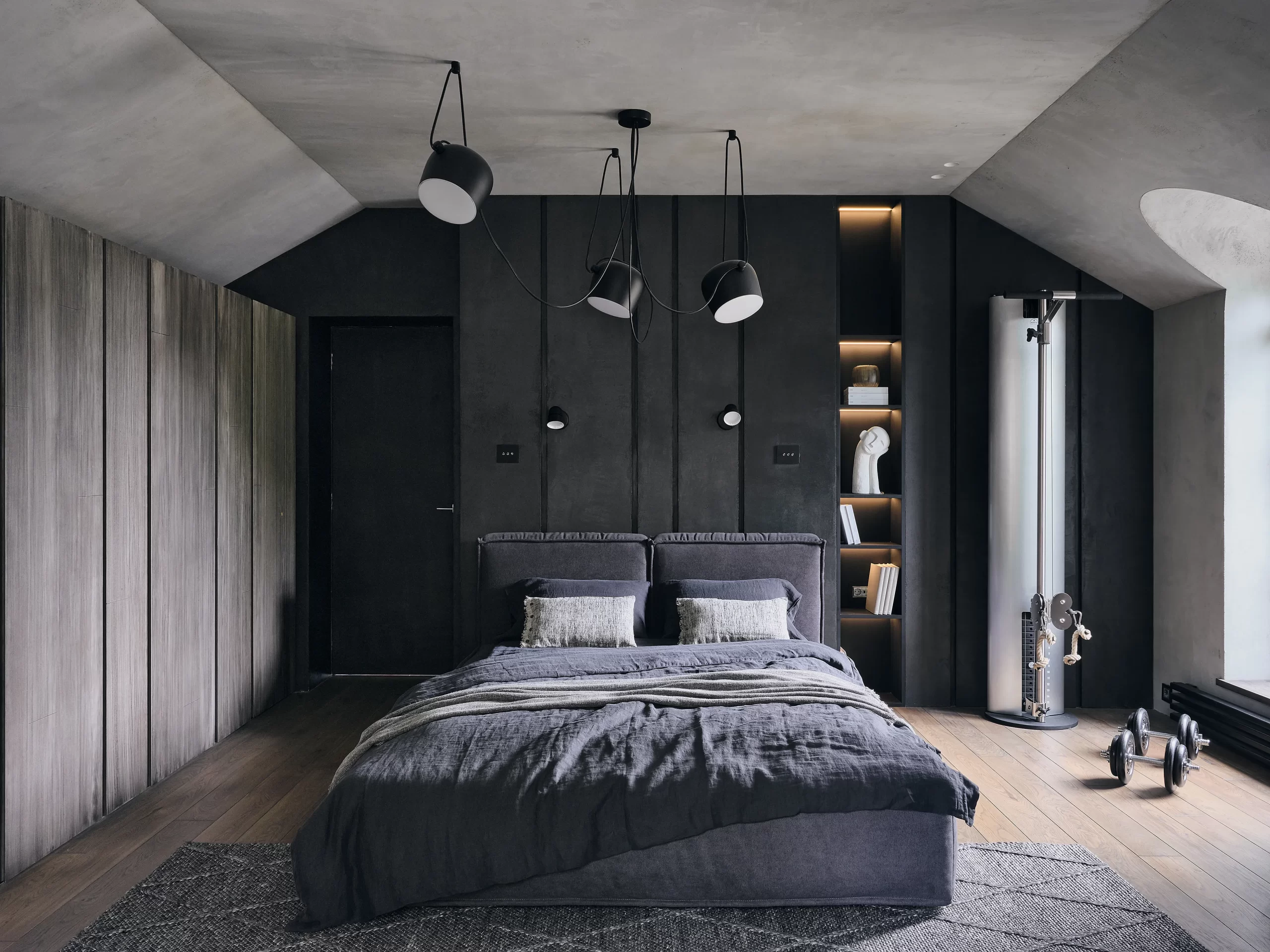
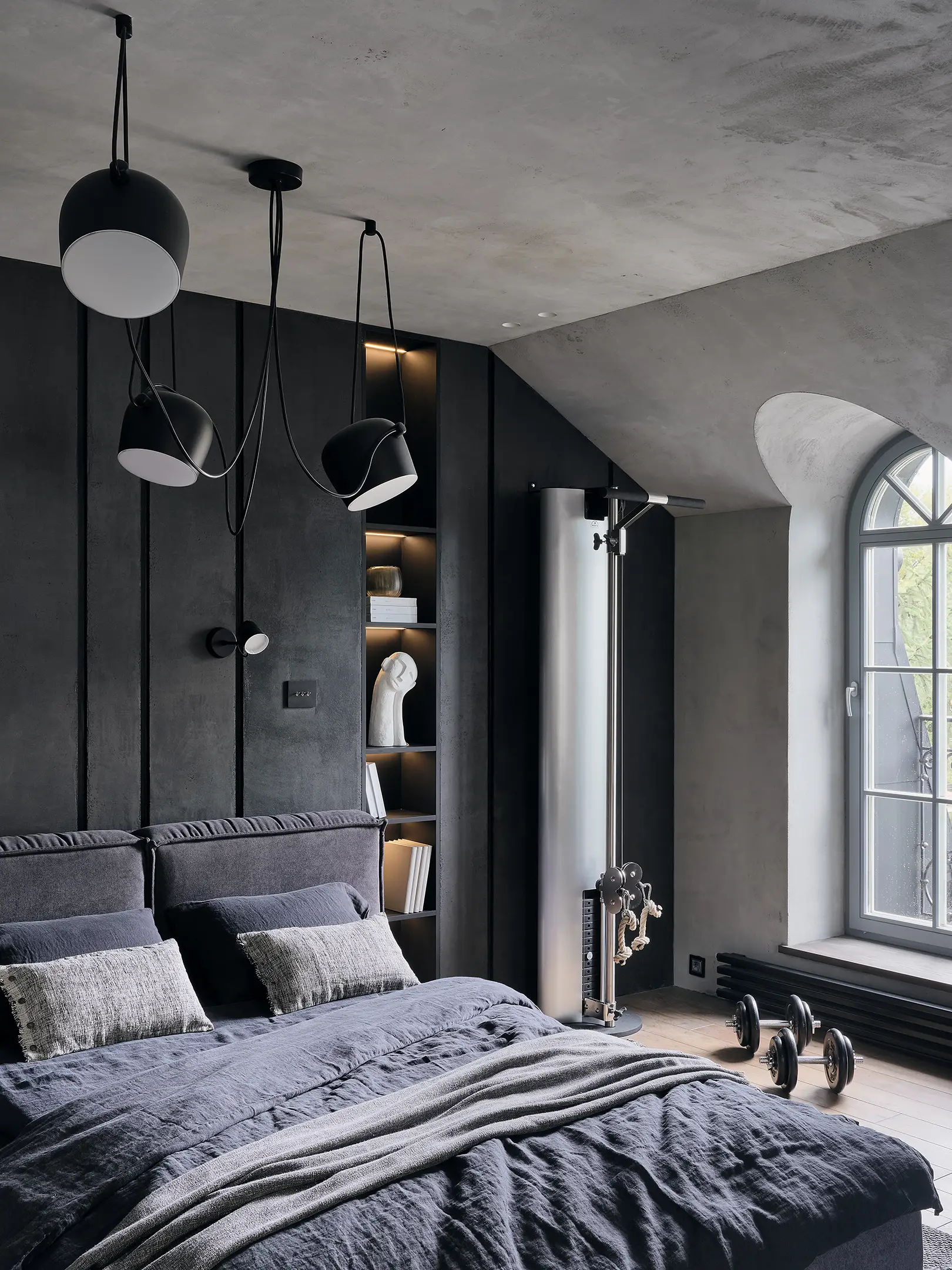
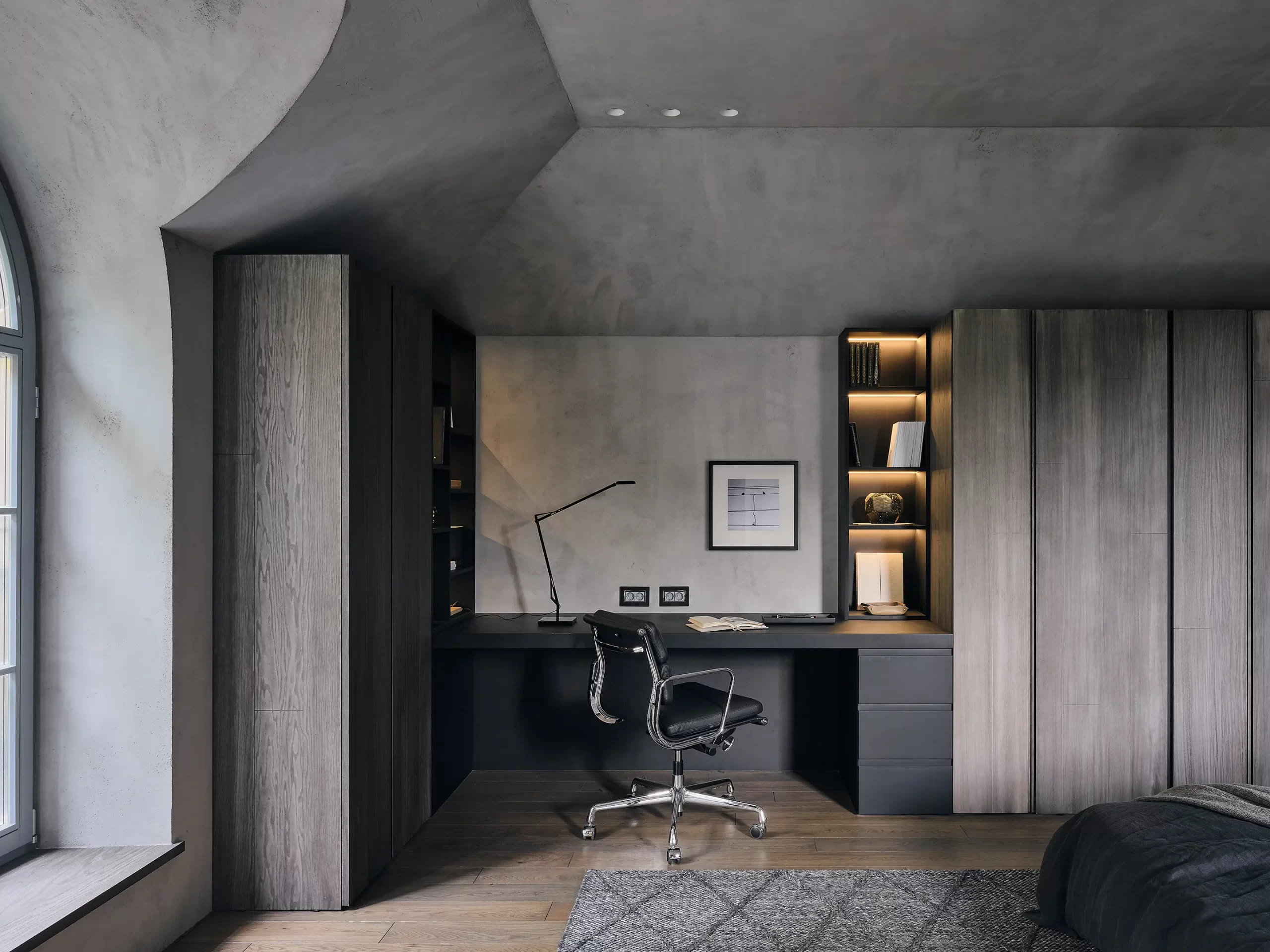
The son’s bedroom was conceived as an independent world, deliberately detached from the rest of the house. The teenager imagined a loft-like environment where he could study, read, play on the computer, spend time with friends and exercise.
Rough timber, concrete plaster and a palette of greys and blacks shape a raw yet comfortable space tailored to the life of a teenager.